
A single medication error, a missed fall risk assessment, or a lapse in wound care documentation can expose a Virginia home health agency to a malpractice claim that costs tens of thousands of dollars before a courtroom is ever involved. The average cost to defend a medical malpractice claim, even one that does not result in a payout, can exceed $30,000 in legal fees alone. For agencies that send nurses, aides, and therapists into private homes across Northern Virginia and beyond,
professional liability insurance is not a luxury but a financial necessity. This coverage protects your agency against allegations of caregiver errors, clinical negligence in nursing services, medication administration mistakes, and other professional acts or omissions that result in patient harm. Understanding how defense costs, policy limits, and exclusions shape your actual protection is essential before you sign any policy. The stakes are high: Virginia's medical malpractice damage cap
is scheduled to reach $2.70 million in July 2026, meaning a single adverse judgment could threaten the survival of an underprepared agency. What follows is a practical breakdown of how these policies work, what they cover, and where the gaps tend to hide.
Understanding Professional Liability for Virginia Home Health Agencies
Professional liability insurance, often called errors and omissions (E&O) or malpractice coverage, is designed to respond when a patient or family alleges that your agency's staff caused harm through a professional act, error, or failure to act. This is distinct from bodily injury claims that arise from premises hazards or vehicle accidents. Your policy should be structured to address the specific clinical and caregiving risks that home health agencies face daily, from skilled nursing visits to personal care assistance.
The Difference Between General and Professional Liability
General liability insurance covers third-party bodily injury and property damage claims that stem from your business operations or premises. If a visiting nurse trips over a patient's rug and damages furniture, that is a general liability matter. Professional liability, by contrast, responds when the injury results from the professional service itself: a missed medication dose, an improperly performed transfer, or a failure to escalate a change in patient condition. Many agencies mistakenly assume their general liability policy covers clinical errors, but it does not. A home health agency needs both types of coverage, and they serve entirely different functions.
Virginia State Regulations and Compliance Standards
Virginia requires home health organizations to be licensed through the Virginia Department of Health, and licensure standards include expectations around staff qualifications, supervision ratios, and clinical protocols. While the Commonwealth does not mandate a specific dollar amount of professional liability coverage for licensure, many referral partners, hospital systems, and managed care contracts require proof of
malpractice insurance with minimum limits, often $1 million per occurrence and $3 million aggregate. Virginia law also imposes a
statutory cap on medical malpractice damages that adjusts periodically. As of 2026, that cap sits at $2.70 million, which means your policy limits should reflect this exposure ceiling. Agencies operating with $500,000 per-occurrence limits are leaving themselves dangerously exposed.
By: Venee Galloway, CPCU, CBIA, CLCS, SBCS
Director of Commercial Insurance
Core Coverage: Protecting Against Caregiver and Nursing Errors
The heart of any professional liability policy for a home health agency is its response to clinical and caregiving mistakes. These claims typically fall into a few recurring categories, each carrying distinct risk profiles and defense considerations.
Medication Administration and Management Claims
Medication errors remain one of the most frequent sources of professional liability claims in home health care. Research shows that medication errors in home care settings are alarmingly common, with contributing factors including poor communication during care transitions, inadequate medication reconciliation, and patient complexity. A nurse who administers the wrong dosage of a blood thinner, or an aide who fails to report that a patient has stopped taking a prescribed medication, can trigger a claim alleging negligence. Your professional liability policy should cover the defense and indemnity costs associated with these allegations, including expert witness fees, medical record reviews, and settlement negotiations.
Clinical Negligence in Specialized Nursing Services
Skilled nursing visits for wound care, IV therapy, catheter management, and chronic disease monitoring carry elevated malpractice exposure. A wound that worsens due to improper dressing technique, or a PICC line infection attributed to inadequate sterile protocol, can result in significant patient harm and substantial claims. These cases often require expensive medical expert testimony, and defense costs can escalate quickly. Your policy must cover the full scope of nursing services your agency provides, and you should verify that coverage extends to all clinical specialties your staff performs, not just basic home health aide tasks.
Physical Injury Resulting from Improper Patient Handling
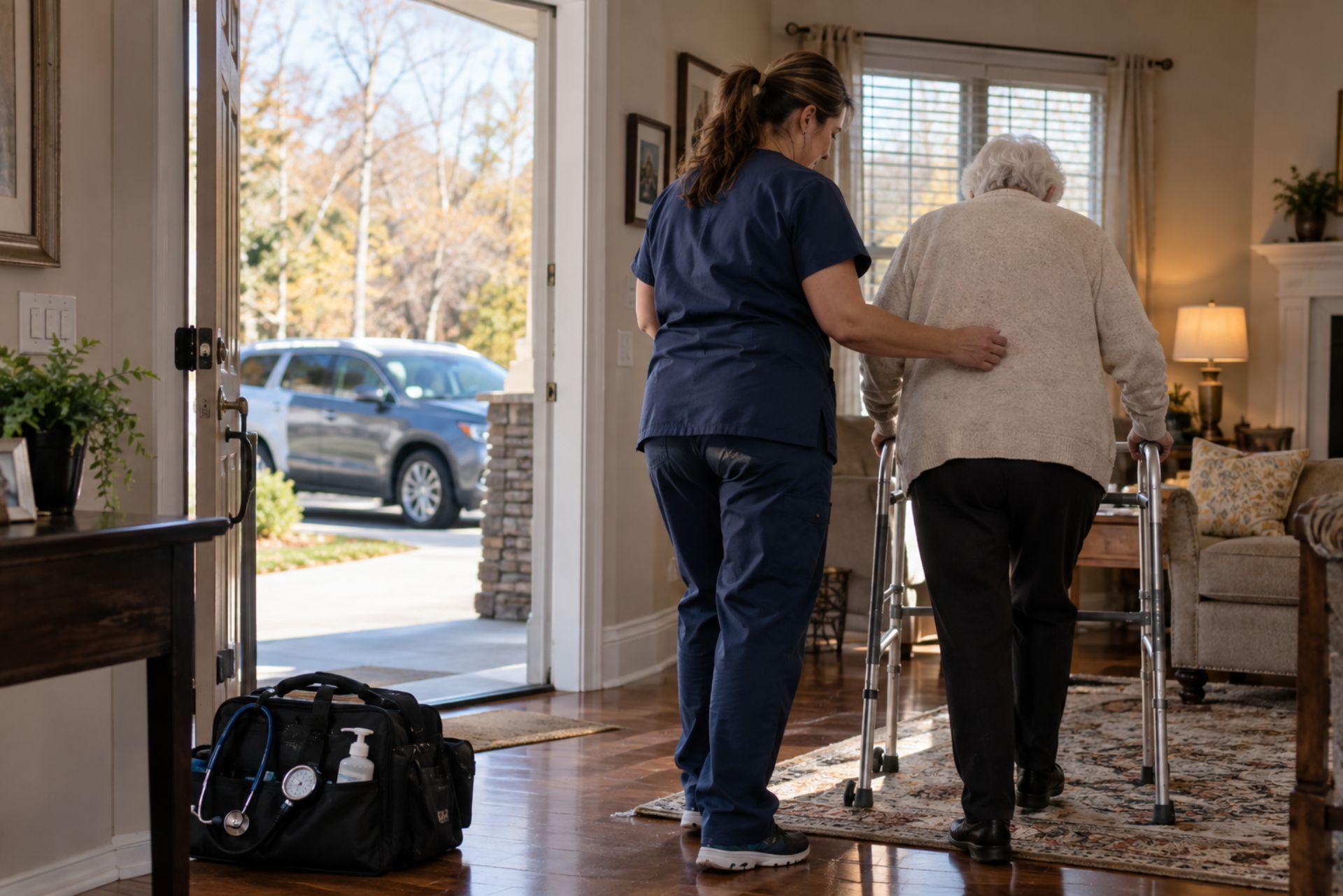
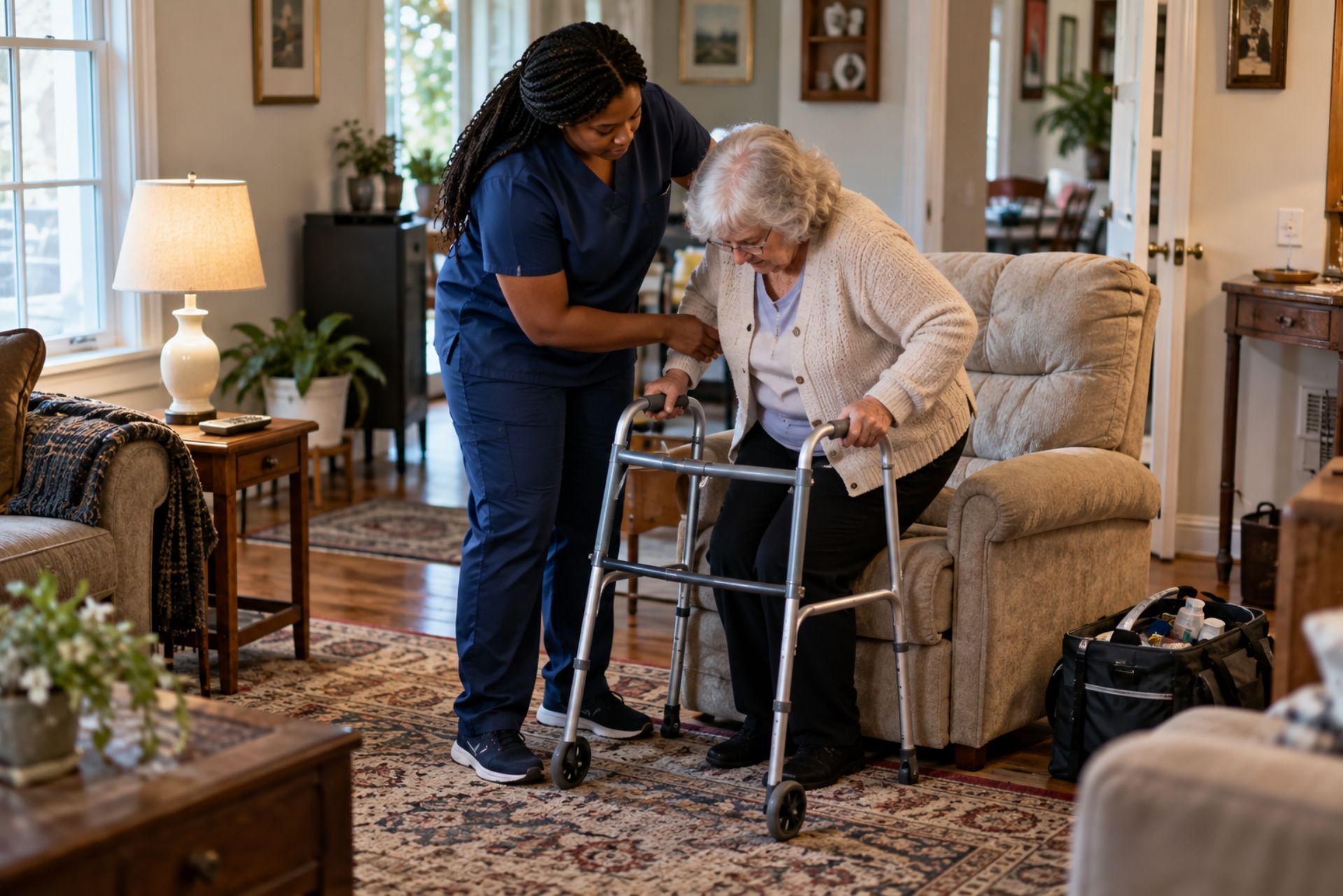
Patient transfers, ambulation assistance, and repositioning are routine tasks that carry real injury risk. A fractured hip from a dropped transfer or a shoulder injury from improper lifting technique can generate claims that straddle the line between general and professional liability. Most insurers treat these as professional liability matters when the injury results from a failure to follow clinical protocols or care plan instructions. Confirming how your policy classifies patient handling injuries is critical, because a coverage gap here can leave your agency paying out of pocket for both defense and damages.
The Financial Impact of Defense Costs and Legal Fees
Defense costs represent one of the most misunderstood elements of professional liability coverage. Many agency owners focus exclusively on the indemnity limit, the maximum the insurer will pay in a settlement or judgment, without understanding how defense expenses are treated. Some policies include defense costs within the policy limit, meaning every dollar spent on attorneys, depositions, and expert witnesses reduces the amount available for a settlement. Other policies treat defense costs as supplemental, paid in addition to the stated limit. The difference is enormous. A claim with $80,000 in defense costs and a $200,000 settlement requires $280,000 in total coverage. If your policy has a $300,000 per-occurrence limit with defense costs inside the limit, you are left with only $20,000 of breathing room. Malpractice defense in Virginia, where
damage caps continue to rise, demands that you scrutinize how your policy handles these expenses. Ask your carrier or broker explicitly whether defense costs erode your limits.
Selecting the right policy limits and understanding what your policy excludes are two of the most consequential decisions your agency will make. A policy that appears adequate on the declarations page can prove insufficient once you read the fine print.
Aggregate vs. Per-Occurrence Limits
Per-occurrence limits cap the insurer's payment for any single claim. Aggregate limits cap the total payout across all claims during the policy period. A policy with $1 million per occurrence and $3 million aggregate can pay up to $1 million on any individual claim, but no more than $3 million total across all claims in a given year. Agencies with high patient volumes or multiple clinical staff should evaluate whether their aggregate limit is sufficient to absorb multiple claims in a single policy year. A busy agency serving 200 or more patients could face two or three claims simultaneously, and an aggregate limit that seemed generous can be exhausted faster than expected.
Standard Exclusions: Criminal Acts and Cyber Breaches
Every professional liability policy contains exclusions, and home health agencies must understand the most common ones. Criminal acts, including patient abuse or theft, are universally excluded. Sexual misconduct by staff members is typically excluded or subject to a sublimit. Cyber liability, including claims arising from a breach of patient health records or HIPAA violations, is almost always excluded from professional liability policies and requires a separate cyber insurance policy. Punitive damages are excluded in many jurisdictions, and Virginia courts have specific rules about when punitive damages are recoverable. Employment practices claims, such as wrongful termination or discrimination lawsuits filed by employees, are also excluded and require a distinct employment practices liability policy.
The following table illustrates the differences between a basic professional liability policy and a more comprehensive option typically available to Virginia home health agencies:
| Feature | Basic Policy | Comprehensive Policy |
|---|---|---|
| Per-Occurrence Limit | $500,000 | $1,000,000 - $2,000,000 |
| Aggregate Limit | $1,000,000 | $3,000,000 - $5,000,000 |
| Defense Costs | Inside limits | Outside limits (supplemental) |
| Medication Error Coverage | Included | Included |
| Skilled Nursing Services | Limited to basic RN/LPN | All clinical specialties |
| Patient Handling Injuries | May require endorsement | Included |
| Cyber/HIPAA Breach | Excluded | Excluded (separate policy needed) |
| Consent to Settle Clause | No | Yes (agency approval required) |
| Tail Coverage Option | Not available | Available for purchase |
Agencies that provide only personal care aide services may find a basic policy sufficient, but any agency offering skilled nursing, therapy, or infusion services should strongly consider comprehensive coverage. The cost difference between basic and comprehensive options is often modest relative to the protection gained, particularly given Virginia's rising malpractice cap. ABP Insurance Agency, Inc., as an independent agency comparing policies from over 25 carriers, can help you identify
the right home health agency coverage without being locked into a single insurer's options.
Common Questions About Home Health Insurance in Virginia
Does Virginia require home health agencies to carry professional liability insurance? Virginia does not mandate a specific dollar amount for licensure, but most managed care contracts and hospital referral agreements require proof of malpractice coverage with minimum limits of $1 million per occurrence.
Are individual caregivers covered under the agency's policy, or do they need their own? Most agency policies cover employees acting within the scope of their employment. Independent contractors, however, are often excluded and should carry their own professional liability coverage.
What happens if a claim is filed after the policy expires? This depends on whether your policy is written on a claims-made or occurrence basis. Claims-made policies only cover claims reported during the active policy period. If you cancel a claims-made policy, you may need to purchase tail coverage to protect against late-reported claims.
How does the Virginia malpractice cap affect my coverage needs? The cap limits total damages a plaintiff can recover, but it does not limit defense costs. With the cap at $2.70 million in 2026, your policy limits should be calibrated to cover both potential damages and the cost of mounting a defense.
Can my agency be sued for a caregiver's actions on their own time? Generally, no. Professional liability policies cover acts performed within the scope of employment and in connection with covered professional services. Off-duty conduct by staff is not covered.
Making the Right Choice for Your Agency
Selecting professional liability coverage for your Virginia home health agency requires more than picking the cheapest premium. You need to match your policy limits to Virginia's malpractice damage cap, confirm that defense costs are handled outside your limits whenever possible, and verify that every clinical service your staff provides is covered without restrictive sublimits or endorsements. Pay close attention to exclusions for cyber liability, criminal acts, and employment practices, and budget for separate policies where those gaps exist. Agencies that employ three or more workers should also ensure they carry Virginia-mandated workers' compensation coverage alongside their professional liability policy.
If you are unsure whether your current coverage adequately protects your agency, staff, and patients, a policy review with an experienced insurance professional can reveal gaps before a claim does. ABP Insurance Agency, Inc., backed by over 150 years of combined staff experience and 120+ five-star Google reviews, offers multilingual support in nine languages to help Virginia home health agencies find tailored coverage.
Get in touch with one of their agents to compare options across multiple carriers and ensure your agency is properly protected.
Our Reviews
Trusted Advice, Proven Results
See what our clients have to say about their experience working with us, or share feedback about your experience.

PERSONAL INSURANCE
Protect What Matters Most
Home, auto, and life coverage at competitive rates from 25+ carriers.
Home Insurance
Covers your home and belongings from events like fire, theft, or storms. Ensures peace of mind with clear, reliable coverage for houses, condos, apartments, and rentals
Auto Insurance
Covers vehicle repairs, liability, and medical costs from accidents. Protects you and your car with easy-to-understand policies that meet Virginia requirements.
Umbrella Insurance
Provides extra liability coverage beyond home and auto policies. Adds protection for unexpected situations that exceed your standard policy limits.
Renters Insurance
Covers your personal belongings and provides liability protection if you rent your home. Replaces items damaged by fire, theft, or water at a low monthly cost.
Condo Insurance
Fills the coverage gaps your HOA master policy leaves open. Protects your unit's interior, personal property, and liability from covered losses.
Classic & Specialty Vehicles
Coverage for classic cars, motorcycles, ATVs, boats, and RVs. We partner with specialty carriers like Hagerty to protect vehicles that standard auto policies do not cover.
BUSINESS INSURANCE
Secure What You've Built
Coverage solutions for growing companies backed by decades of commercial experience.






INDUSTRIES WE SERVE
Virginia's Businesses We Protect
Insurance solutions to help Virginia businesses protect their assets, employees, and operations.



FAQs
Your Questions, Answered
Explore our FAQs to get answers to some of the most common questions about our insurance solutions and services.
What languages do your agents speak?
We have agents who are fluent in Spanish, Vietnamese, Mandarin, Cantonese, Korean, Hindi, Urdu, and Punjabi. If you prefer a language other than English, just let us know!
Who do you typically work with?
We work with clients at all stages of life—from young professionals and growing families to high-net-worth individuals and retirees. We work with both small and large companies. No matter where you are on your journey, we can provide insurance solutions that align with your needs.
How do I get started?
It’s easy! Simply click here to get started. From there you will be able to seamlessly transfer your current coverage information to us or answer a few questions and one of our agents will be in touch.
How do you charge for your services?
We never charge fees for our service. As independent agents, we are paid by the insurance company after the policies you select are issued. Our compensation is a small percentage of the policy premium.
What makes ABP Insurance different from other insurance providers?
ABP Insurance is an independent agency. We work with over 25 insurance carriers to find the best coverage and rates for your needs. We do not represent a single company — we represent you. Our team also speaks nine languages, making us one of the most accessible agencies in Northern Virginia. We combine modern technology with personal service so clients get fast quotes, clear explanations, and ongoing support throughout their policy term.
What areas does ABP Insurance serve?
Our office is in Falls Church, Virginia, and we serve clients throughout Northern Virginia, the greater D.C. metro area, and beyond. We currently write policies in Virginia, Maryland, Washington D.C., Massachusetts, New Hampshire, Maine, Georgia, Texas, and North Carolina. Because we work with many of the largest national carriers, we can often help clients who own property in multiple states or who are relocating.
Contact Us
Phone Number:
703-846-0558
Email Address:
info@abpinsurance.com
Located at: 8315 US-29 Ste 215, Fairfax, VA 22031, United States
In-Person by Appointment Only