
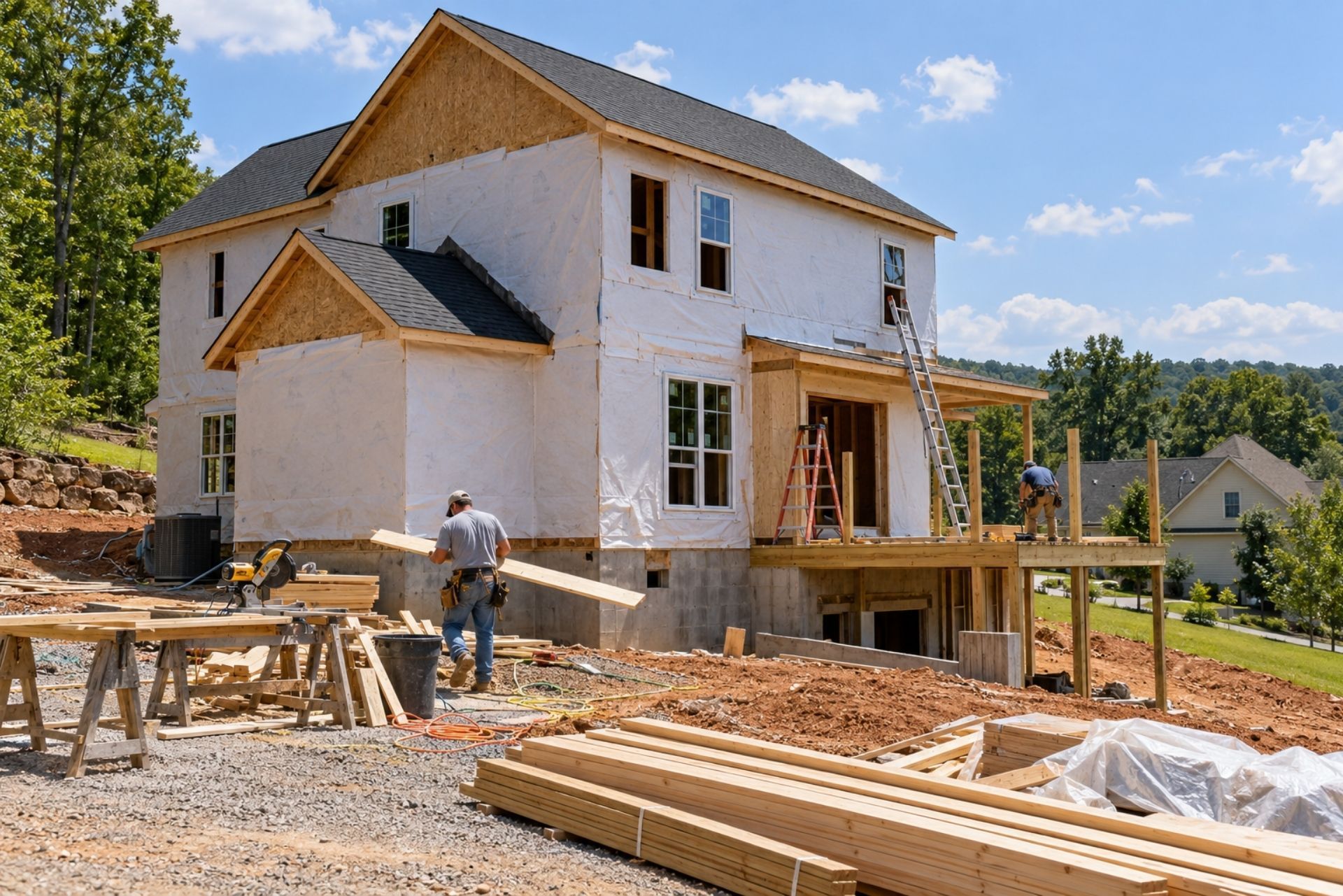
Picture a framing crew finishing a custom home in Loudoun County, closing on schedule, and moving to the next lot. Four years later, the homeowner reports water intrusion behind the siding, mold in the wall cavities, and a demand letter from an attorney seeking repair costs that far exceed the original profit on the job. Whether that claim is paid, denied, or fought out of pocket depends almost entirely on the insurance decisions made long before the first shovel hit the ground.
Virginia builders face specific risks: occurrence-based liability policies that punish coverage gaps, a statutory repose period that keeps old projects alive as potential claims, workers' compensation obligations enforced by the state, and general contractors who rely heavily on subcontractors whose insurance may or may not hold up. This guide to Virginia home builder insurance covers general liability, builder's risk, workers' compensation, subcontractor requirements, completed operations, and costs. It explains how each piece functions and where most builders discover gaps only after a loss.
The goal is practical. You should finish with a clear sense of what to buy, what to require from others, and what questions to put to your agent before renewal.
Essential Insurance Coverages for Virginia Home Builders
A residential construction business needs three core policies working together, and none of them can substitute for another. General liability responds to injury and damage claims from outside parties. Builder's risk protects the structure itself while it is being built. Workers' compensation covers your employees when they are hurt on the job. Most builders also carry commercial auto, inland marine for tools and equipment, and an umbrella policy, although the three below form the foundation that lenders, homeowners, and general contractors will ask about first.
General Liability: Protecting Against Third-Party Claims
Commercial general liability (CGL) insurance pays for bodily injury and property damage that your operations cause to people other than your employees. Typical claims include a neighbor's child injured after climbing onto an unsecured site, a delivery driver tripping over debris, or an excavator cracking a neighboring foundation. The policy also pays defense costs, which frequently exceed the settlement itself in contested construction disputes.
Most builder CGL policies are written on an occurrence basis, meaning the policy in force when the damage happened responds, not the policy in force when the claim is filed. Because these policies are occurrence-based, builders must maintain continuous coverage, since a single day's lapse can lead to the denial of a claim for a house built years prior. Many builders assume their current policy covers everything they have ever built, and that assumption fails when a gap or a carrier change with poorly drafted exclusions sits in the middle of the timeline.
Pay close attention to exclusions. Common problem areas include:
- Residential construction exclusions that some carriers attach to policies intended for commercial contractors
- Subsidence and earth movement exclusions that can eliminate coverage for settling foundations
- Prior work exclusions that bar claims arising from projects completed before the policy started
- Action-over exclusions that remove coverage when an injured subcontractor employee sues you
Builder's Risk: Securing Structures Under Construction
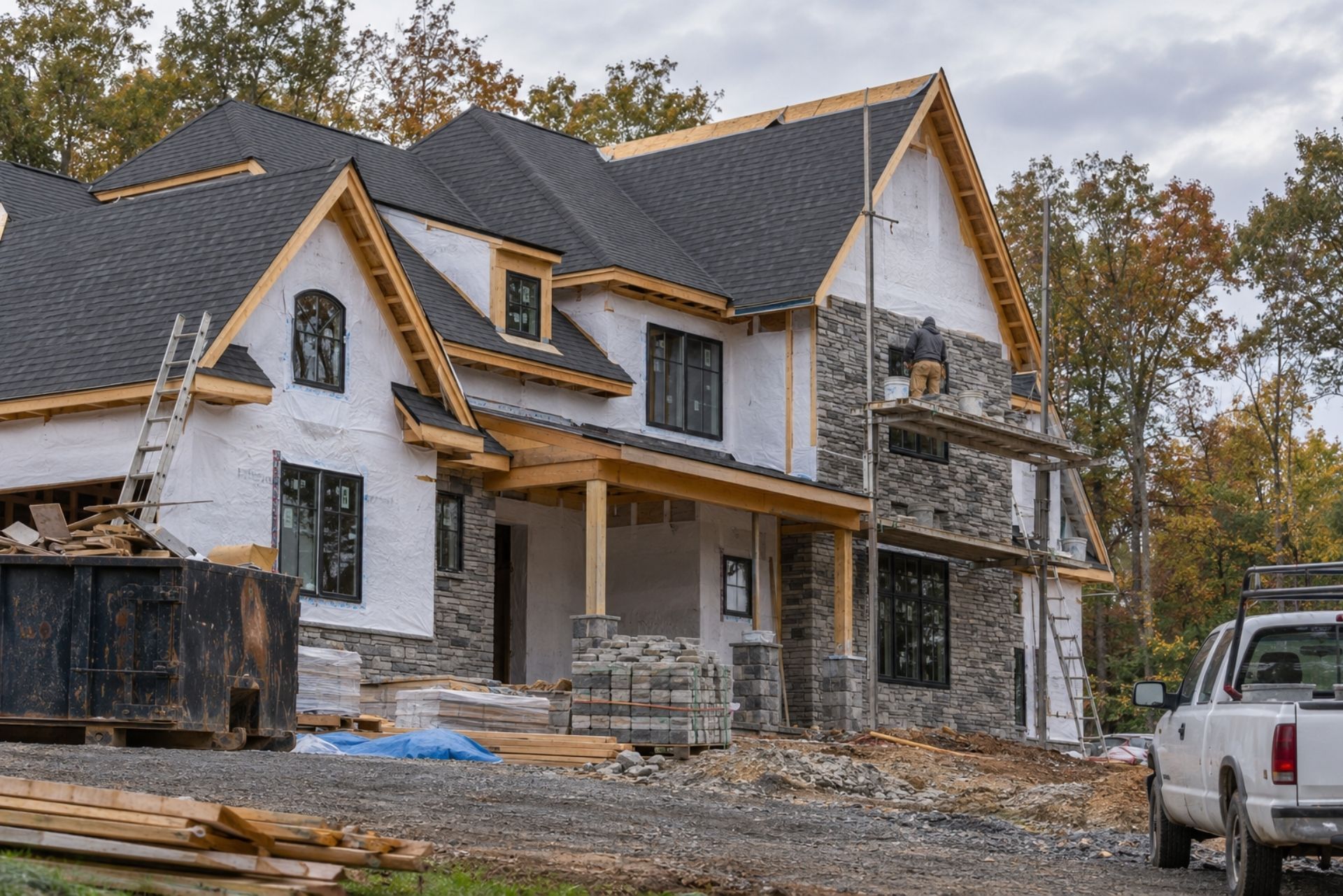
Builder's risk insurance covers the building itself, along with materials on site, in transit, and sometimes in temporary storage, while construction is underway. Fire, windstorm, theft of materials, vandalism, and collapse during construction are the classic covered perils. A single copper theft from a nearly finished home in Prince William County, or a summer thunderstorm toppling unbraced trusses, can wipe out the profit on several projects if the structure is not insured.
Coverage is usually written for the completed value of the project and runs from the start of construction until the home is occupied, sold, or accepted by the owner. One thing to keep in mind is that responsibility for buying this policy should be spelled out in the construction contract, because owners, lenders, and builders often each assume someone else purchased it. Review policy terms for vacancy limitations, theft sublimits, and soft costs such as extended loan interest when a loss delays completion.
Workers' Compensation: Virginia State Requirements
Virginia requires most employers to carry workers' compensation once they reach the employee threshold set by the Virginia Workers' Compensation Act, and the Virginia Workers' Compensation Commission enforces compliance with penalties for uninsured employers. The coverage pays medical bills and lost wages for employees injured on the job, and it generally shields you from being sued directly by those employees. Falls from roofs and ladders, nail gun injuries, and back strain from lifting sheathing are among the most common construction claims.
Benefit levels shape what carriers pay and, over time, what you pay. Effective July 1, 2026, the
maximum weekly workers' compensation benefit in Virginia is $1,507.01, and injured workers may also recover travel costs to medical appointments at a
mileage reimbursement rate of $0.76 per mile. Virginia's statutory employer doctrine can also make a general contractor responsible for injuries to an uninsured subcontractor's workers, which is why sub insurance verification matters so much.

By: Keri Park
Director of Client Experience
Completed operations coverage is the part of a general liability policy that responds after the job is done and the home has been turned over. It is essential because it responds to claims surfacing years after a project is finished, and construction defect claims rarely appear at the final walkthrough. They emerge after a few seasons of freeze-thaw cycles, heavy rain, or settling soil.
Typical completed operations claims for residential builders include:
- Water intrusion from improperly flashed windows, decks, or roof penetrations
- Foundation cracking and settlement tied to poor compaction or drainage
- Deck collapses caused by inadequate ledger attachment
- Fire or carbon monoxide events traced to improper venting or electrical work
- Mold growth resulting from vapor barrier or ventilation errors
Virginia enforces a 5-year statute of repose for construction defects in certain contexts, and statutory repose periods for improvements to real property can extend exposure further depending on the claim type. Your attorney should confirm which periods apply to a given project. The practical takeaway is that each home you build remains a live exposure for years, so your coverage must stay continuous throughout that window.
Policy wording deserves careful review. Check that the products-completed operations aggregate limit is equal to your general aggregate rather than reduced, that the policy has no exclusion for work performed by subcontractors, and that "your work" exclusions retain the standard subcontractor exception. That exception is often the only reason a defect caused by a sub's faulty workmanship is covered at all.
Builders who are winding down a business or retiring should ask about discontinued operations or extended completed operations coverage. Closing your company and canceling your CGL policy does not end your liability for homes already built. A tailored policy can continue to respond while the repose period runs out, and the cost is modest compared with defending a single uninsured defect suit.
Managing Subcontractor Risks and Insurance Certificates
Most residential builders subcontract the majority of the physical work, including framing, roofing, plumbing, electrical, HVAC, drywall, and concrete. Every one of those trades brings its own claim exposure, and unless your contracts and verification process push that risk back to the responsible party, it lands on your policy. Carriers know this, and many will audit your subcontractor files at policy year-end, charging additional premium for every uninsured or underinsured sub they find.
Verifying Subcontractor Limits and Endorsements
A certificate of insurance (COI) is a snapshot, not a guarantee. It shows coverage on the day it was issued and does not by itself grant you any rights under the sub's policy. Build a verification routine that includes the following steps:
- Require a current COI before any sub sets foot on the job site, issued directly by the sub's agent.
- Confirm general liability limits meet your contract minimums, commonly matching your own per-occurrence and aggregate limits.
- Verify workers' compensation coverage or a valid exemption, and confirm the classification matches the actual trade.
- Request copies of the actual endorsements, not just checked boxes on the certificate.
- Track expiration dates and obtain renewal certificates before policies lapse mid-project.
- Confirm the sub holds an active Virginia contractor license through the Department of Professional and Occupational Regulation (DPOR).
Licensing offers a quick signal about a sub's seriousness. DPOR license application fees are $439.50 for Class A and $419.50 for Class B contractors, and a sub unwilling to maintain proper licensing is unlikely to maintain proper insurance.
The Importance of Additional Insured Status
Additional insured (AI) status makes you an insured party under the subcontractor's general liability policy, so that policy defends and pays claims against you arising from the sub's work. Without it, you may rely only on a contractual indemnity clause, which is only as good as the sub's assets and willingness to pay.
Require AI coverage for both ongoing and completed operations, because many endorsements cover only ongoing work and leave you exposed once the sub leaves the job. Ask for primary and noncontributory wording so the sub's policy responds before yours, and request a waiver of subrogation. Pair these insurance terms with a written indemnification agreement drafted by counsel familiar with Virginia contract law.
Comparing Coverage Needs: General Liability vs. Builder's Risk
Builders frequently confuse these two policies, and some assume one covers what the other does. The distinction is straightforward: general liability covers your legal responsibility to others, while builder's risk covers physical damage to the project itself. A fire on a jobsite can trigger both, with builder's risk paying to rebuild the home and general liability paying for damage the fire spreads to a neighbor's property.
| Feature | General Liability | Builder's Risk |
|---|---|---|
| What it protects | Your liability to third parties | The structure and materials |
| Typical claims | Injuries, neighbor property damage, defects | Fire, theft, wind, vandalism |
| Coverage period | Annual, renewed continuously | Project start to completion |
| Who usually buys it | The builder | Builder or owner, per contract |
| Covers your own work? | Limited; defect damage only in some cases | Yes, during construction |
| Post-completion protection | Yes, through completed operations | No, ends at occupancy or sale |
The table shows why neither policy can stand alone. Builder's risk ends when the home is finished, precisely when completed operations exposure under your liability policy begins. General liability, by contrast, typically excludes damage to the work you are actively performing, which is exactly what builder's risk is designed to address.
The catch is the gap between them. Defective workmanship itself is generally excluded under both policies, although resulting damage may be covered. If a framing error causes a wall to collapse during construction, builder's risk may pay for the collapse damage but not to correct the original error. Your agent should walk you through these resulting-damage provisions on both forms before you sign, because that is where many disputed claims begin.
Estimating Insurance Costs for Virginia Construction Businesses
Insurance costs for home builders vary so widely that any single figure would be misleading. A two-person remodeling firm and a production builder closing dozens of homes per year occupy entirely different pricing tiers, and carriers rate each one on its own exposure profile. What can be said with confidence is how premiums are calculated and which levers you control.
General liability is usually rated on payroll, gross receipts, or subcontracted costs, depending on the carrier and classification. Workers' compensation is rated per $100 of payroll by job class, adjusted by your experience modification factor. Builder's risk is priced as a rate against the completed project value, influenced by construction type and location.
There is some favorable news on the workers' compensation side. Effective April 1, 2026, NCCI filed for a 7.7% decrease in voluntary market loss costs and assigned risk rates in Virginia. Loss costs are only one component of a final premium, so your individual rate depends on carrier multipliers and your own claims record, but the filing reflects an improving statewide environment.
Factors Influencing Your Annual Premiums
Underwriters examine several variables when pricing a builder's account:
- Claims history: Most carriers review a five-year loss history, and some look back seven years for liability claims.
- Type of work: Custom single-family, tract homes, and multifamily or condo work carry very different defect exposures.
- Subcontractor controls: Documented COI and AI procedures earn better pricing than informal practices.
- Payroll and receipts: Larger revenue and employee counts increase exposure base.
- Years in business: Newer builders often face higher rates or limited carrier options.
- Safety program: Written fall protection plans and training records support favorable workers' compensation terms.
How to Lower Costs Without Sacrificing Protection
Cutting coverage to save premium is a false economy for builders, because one uninsured defect claim can exceed a decade of savings. Smarter strategies exist. Accurately classify employee payroll so roofers and office staff are not rated identically, and keep subcontractor files clean to avoid audit charges. Consider a higher deductible if your cash reserves can absorb it, and report and manage small claims promptly to protect your experience mod. Bundling general liability, commercial auto, and umbrella coverage with a single carrier can also produce package credits, and comparing several carriers at renewal keeps your pricing competitive.
Common Questions About Virginia Builder Insurance
Does my general liability policy cover a house I built five years ago? It can, through completed operations coverage, provided the damage occurred while you had continuous occurrence-based coverage. A lapse or a prior-work exclusion can eliminate that protection.
Who should buy builder's risk, the owner or the builder? Either party can buy it, and the construction contract should state who is responsible. Lenders on construction loans often require proof of coverage before releasing funds.
Do I need workers' compensation if I only use subcontractors? Possibly. Under Virginia's statutory employer rules, you can be liable for injuries to an uninsured sub's workers, and your carrier may charge premium for uninsured subs found at audit.
Is a certificate of insurance enough proof that a sub is covered? No. A certificate is informational only, so you should also obtain the actual additional insured endorsements and track policy expiration dates.
Why did my premium go up after my policy audit? Audits compare your estimated payroll and receipts to actual figures. Higher revenue, misclassified employees, or uninsured subcontractors commonly increase the final premium.
Can I get coverage if I am a newly licensed builder? Yes, although options may be narrower until you build a claims history. An independent agent can approach carriers that specialize in newer contractors.
Strong builder protection rests on a few connected decisions: continuous occurrence-based general liability with meaningful completed operations limits, builder's risk that matches each project's value and contract terms, workers' compensation that satisfies Virginia requirements, and a disciplined subcontractor verification process backed by additional insured endorsements. Each layer covers a gap the others leave open, and the cost of a missing layer usually appears years after the job is closed.
ABP Insurance Agency, an independent agency in Fairfax, compares builder programs from more than 25 carriers and serves clients in nine languages, including Spanish, Vietnamese, Korean, Mandarin, Hindi, and Urdu, so contract terms and exclusions are explained clearly. If you are preparing for renewal or starting a new project, Get in touch to request a free quote or speak with a multilingual agent. A careful policy review today is far less expensive than defending a defect claim alone tomorrow.
Our Reviews
Trusted Advice, Proven Results
See what our clients have to say about their experience working with us, or share feedback about your experience.

PERSONAL INSURANCE
Protect What Matters Most
Home, auto, and life coverage at competitive rates from 25+ carriers.
Home Insurance
Covers your home and belongings from events like fire, theft, or storms. Ensures peace of mind with clear, reliable coverage for houses, condos, apartments, and rentals
Auto Insurance
Covers vehicle repairs, liability, and medical costs from accidents. Protects you and your car with easy-to-understand policies that meet Virginia requirements.
Umbrella Insurance
Provides extra liability coverage beyond home and auto policies. Adds protection for unexpected situations that exceed your standard policy limits.
Renters Insurance
Covers your personal belongings and provides liability protection if you rent your home. Replaces items damaged by fire, theft, or water at a low monthly cost.
Condo Insurance
Fills the coverage gaps your HOA master policy leaves open. Protects your unit's interior, personal property, and liability from covered losses.
Classic & Specialty Vehicles
Coverage for classic cars, motorcycles, ATVs, boats, and RVs. We partner with specialty carriers like Hagerty to protect vehicles that standard auto policies do not cover.
BUSINESS INSURANCE
Secure What You've Built
Coverage solutions for growing companies backed by decades of commercial experience.






INDUSTRIES WE SERVE
Virginia's Businesses We Protect
Insurance solutions to help Virginia businesses protect their assets, employees, and operations.


FAQs
Your Questions, Answered
Explore our FAQs to get answers to some of the most common questions about our insurance solutions and services.
What languages do your agents speak?
We have agents who are fluent in Spanish, Vietnamese, Mandarin, Cantonese, Korean, Hindi, Urdu, and Punjabi. If you prefer a language other than English, just let us know!
Who do you typically work with?
We work with clients at all stages of life—from young professionals and growing families to high-net-worth individuals and retirees. We work with both small and large companies. No matter where you are on your journey, we can provide insurance solutions that align with your needs.
How do I get started?
It’s easy! Simply click here to get started. From there you will be able to seamlessly transfer your current coverage information to us or answer a few questions and one of our agents will be in touch.
How do you charge for your services?
We never charge fees for our service. As independent agents, we are paid by the insurance company after the policies you select are issued. Our compensation is a small percentage of the policy premium.
What makes ABP Insurance different from other insurance providers?
ABP Insurance is an independent agency. We work with over 25 insurance carriers to find the best coverage and rates for your needs. We do not represent a single company — we represent you. Our team also speaks nine languages, making us one of the most accessible agencies in Northern Virginia. We combine modern technology with personal service so clients get fast quotes, clear explanations, and ongoing support throughout their policy term.
What areas does ABP Insurance serve?
Our office is in Falls Church, Virginia, and we serve clients throughout Northern Virginia, the greater D.C. metro area, and beyond. We currently write policies in Virginia, Maryland, Washington D.C., Massachusetts, New Hampshire, Maine, Georgia, Texas, and North Carolina. Because we work with many of the largest national carriers, we can often help clients who own property in multiple states or who are relocating.
Contact Us
Phone Number:
703-846-0558
Email Address:
info@abpinsurance.com
Located at: 8315 US-29 Ste 215, Fairfax, VA 22031, United States
In-Person by Appointment Only