
Consider an electrician whose van is broken into overnight in a Richmond apartment complex parking lot, resulting in the loss of several thousand dollars in meters, drills, and wire pullers. The same week, a kitchen fire at his small Chesterfield shop forces him to suspend operations for a month. Losses of this kind are common in the trades, and how quickly a contractor recovers depends largely on how the insurance program was assembled before the loss occurred.
For many tradespeople, the Business Owners Policy is the foundation of that program. This guide to a Virginia small contractor business owners policy addresses property, general liability, tools and equipment, business income, eligibility, and costs. It is written for owners who wish to understand what they are purchasing rather than signing whatever document is presented to them.
The information provided herein is general and educational. It does not constitute a binding statement of coverage, and the terms, conditions, and exclusions of each policy vary by carrier and by state filing. You should review Your actual policy forms with a licensed agent before relying on any particular coverage.
Understanding Business Owner Policies (BOP) for Virginia Contractors
A Business Owners Policy (commonly referred to as a "BOP") is a package policy. It combines commercial property coverage and general liability coverage under a single contract, usually at a lower premium than purchasing each line separately. Insurers offer this bundled discount because BOP-eligible businesses are considered smaller, more predictable risks. The trade-off is that underwriting guidelines restrict who may qualify.
For contractors, the BOP generally serves as the base layer and does not provide complete protection on its own. A standard BOP does not include workers' compensation, commercial auto, professional liability, or surety bonds. These coverages must be purchased separately, and several of them may be required by law or by contract. Virginia requires most employers with more than two regularly employed workers to carry workers' compensation, and any vehicle titled to the business requires a commercial auto policy that meets the state's 50/100/25 minimum liability limits, together with the required uninsured and underinsured motorist coverage.
A frequent mistake among new clients is assuming that a BOP is "full coverage." It is not. The BOP is properly understood as the central component of a larger structure: it addresses premises, owned property, and third-party injury claims, while the remaining risks must be placed under other policies.

By: Keri Park
Director of Client Experience
Core Coverage: General Liability and Property Protection
The two pillars of any BOP are property and general liability. Each operates under different triggers, limits, and exclusions, so You should evaluate each pillar separately when reviewing a quotation rather than looking only at the total premium.
Safeguarding Your Physical Business Assets
The property portion of a BOP covers buildings You own (if applicable) and business personal property, including but not limited to office furniture, computers, stored materials, and inventory located at Your described premises. Covered perils typically include fire, wind, theft, and vandalism. Flood and earth movement are excluded unless they are separately endorsed.
The valuation method warrants careful attention. A Replacement Cost policy pays to replace damaged property with new property of like kind and quality, while an Actual Cash Value (ACV) policy deducts depreciation. Virginia contractors received a significant protection in this regard: the Bureau of Insurance issued Administrative Letter 2025-06, effective October 31, 2025, which prohibits insurers from depreciating labor costs when calculating ACV. In practice, only the physical materials may be depreciated, which can meaningfully increase a settlement following a shop fire or a building loss.
Liability Risks in the Virginia Construction Industry
General liability responds when Your operations cause bodily injury or property damage to a third party. Typical contractor claims include a homeowner tripping over an extension cord left in a hallway, a plumber's fitting failing and flooding a finished basement in Arlington, or a roofer's dropped bundle of shingles damaging a neighbor's car in Virginia Beach. Completed operations coverage is particularly important because many claims arise months after a job has been finished and invoiced.
Most commercial clients and general contractors in Northern Virginia and Hampton Roads require limits of $1,000,000 per occurrence and $2,000,000 aggregate, together with additional insured status and, frequently, a waiver of subrogation. Before submitting a bid, You should confirm that Your BOP permits these endorsements. Some low-cost policies do not, and contractors often learn this only when a certificate request is refused.
Protecting Your Gear: Tools and Equipment Coverage
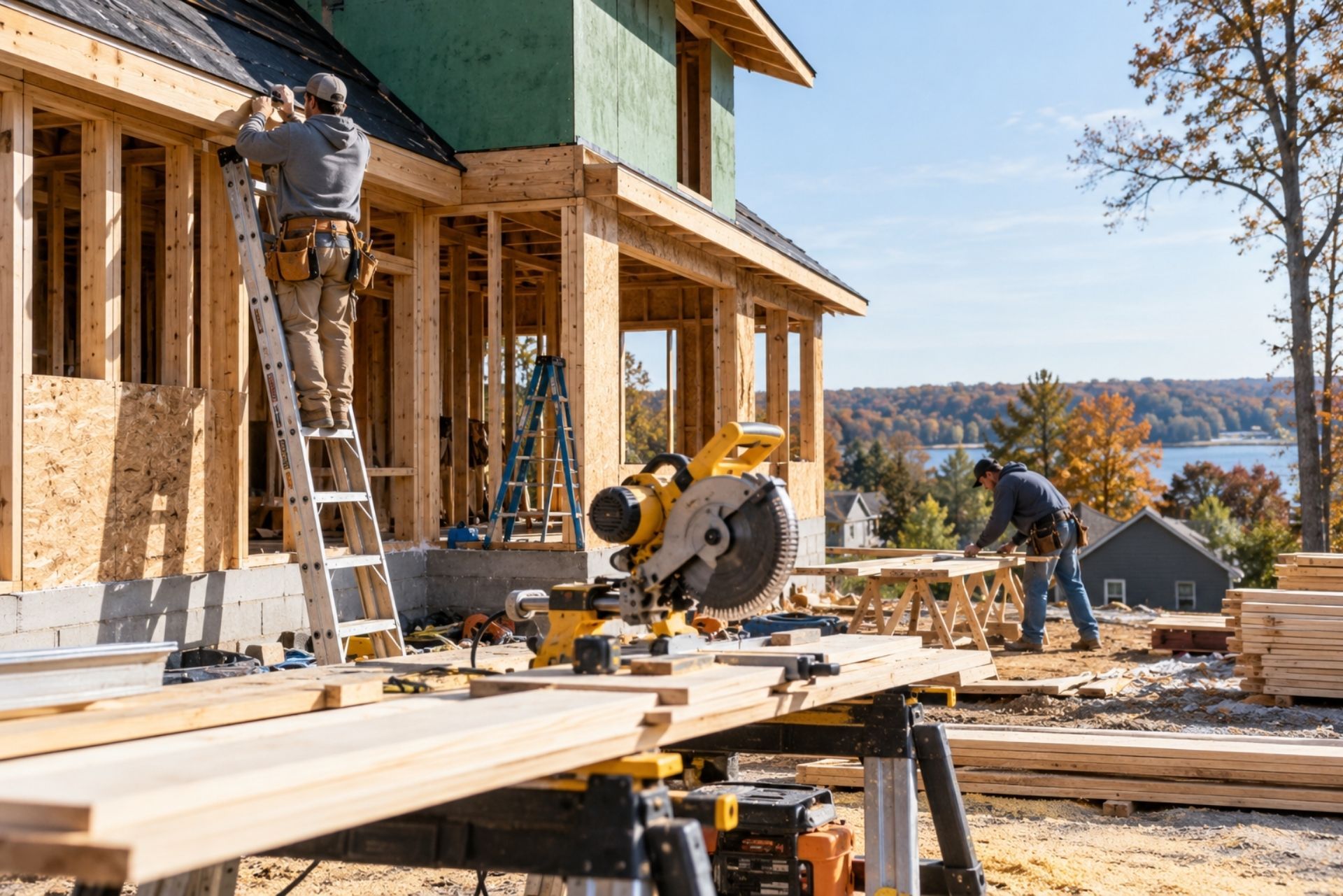
The most common coverage gap affecting Virginia contractors is the assumption that tools are protected wherever they happen to be. In fact, standard property insurance often excludes items in transit or at job sites, because the BOP property form is written to protect property located at the business address. A compressor stolen from a jobsite trailer in Leesburg, or a laser level taken from an unlocked truck bed, may fall entirely outside that coverage.
The solution is Inland Marine coverage, often written as a contractor's equipment floater or a tools and equipment endorsement. Inland Marine floater coverage protects mobile equipment such as power tools, graders, and scaffolding while those items are in transit or located at various jobsites. Coverage follows the equipment rather than the address.
When arranging this coverage, You should consider the following:
- Scheduled vs. unscheduled items: High-value equipment, such as a skid steer or mini excavator, should be individually listed by serial number, while smaller hand tools may be covered under a blanket limit.
- Per-item sublimits: Many endorsements cap any single tool at $500 or $1,000 unless it is scheduled.
- Theft conditions: Some policies require visible signs of forced entry or locked storage before a vehicle theft claim will be paid.
- Borrowed and rented equipment: Rented machinery generally requires separate "leased or rented equipment" coverage.
You should maintain a current inventory, supported by photographs and receipts, in a cloud folder. Claims are settled more quickly and accurately when ownership and value can be documented.
Business Income and Extra Expense Insurance
Business Income coverage replaces lost net income and pays continuing expenses, such as rent, loan payments, and payroll, when a covered property loss forces You to suspend operations. Extra Expense coverage pays the additional costs of remaining operational, which may include renting a temporary shop, leasing replacement equipment, or expediting the shipment of materials.
This coverage operates under two time-based conditions that You should understand before a claim arises. Benefits generally do not begin until a 48-to-72-hour waiting period has elapsed, and payments continue through a "period of restoration," commonly limited to between 12 and 24 months. A brief closure may therefore produce no payment at all, while a prolonged rebuild could exceed Your limit.
Consider an HVAC company whose warehouse fire destroys its stocked units and its dispatch office. The property portion of the policy pays for the building and the inventory, and Business Income replaces the profit lost while the crews remain idle. Extra Expense, in turn, pays to lease a temporary bay so that service calls can resume within a week. One issue requires particular care: Business Income is triggered by direct physical damage to covered property. A slow season, the loss of a major client, or a supplier delay unconnected to physical damage does not activate this coverage.
Carriers commonly offer a stripped-down base form and an enhanced form that adds endorsements. The difference in premium is often modest when compared with the difference in protection.
| Coverage Feature | Basic BOP | Comprehensive BOP |
|---|---|---|
| Property valuation | Often ACV | Replacement Cost |
| Tools away from premises | Excluded or minimal | Inland Marine endorsement included |
| Business Income | Limited, may be capped | Actual loss sustained, 12+ months |
| Additional insured endorsement | May require a separate charge | Blanket, often included |
| Waiver of subrogation | Rarely included | Often available |
| Employee dishonesty | Not included | Small limit included |
| Equipment breakdown | Not included | Included |
| Best fit | Home-based, low-tool trades | Contractors with crews, shops, or contracts |
A painter working alone from a home office, using inexpensive tools, may find a basic form adequate. A remodeling firm employing four workers, operating an enclosed trailer, and bidding commercial work almost always requires the comprehensive form, primarily because general contractors will demand blanket additional insured and waiver of subrogation endorsements.
Eligibility Requirements for Virginia Small Contractors
BOPs are designed for small, lower-hazard operations, and contractor eligibility is restricted more tightly than eligibility for retail or office risks. Underwriters evaluate size, trade classification, and the type of work performed.
Licensing also forms part of the underwriting review. Virginia contractors are licensed through the Department of Professional and Occupational Regulation's Board for Contractors and are classified into three tiers (Class A, B, and C) based on contract value and annual revenue. That classification affects licensing obligations and the insurance eligibility a carrier will extend. Underwriters will ask for Your license class and number, and any mismatch between Your license tier and the size of the jobs You report may raise questions.
Annual Revenue and Employee Limits
Each carrier establishes its own thresholds, which are filed with the Virginia State Corporation Commission's Bureau of Insurance. Contractor BOP programs commonly limit eligibility according to annual gross receipts, payroll, and the number of employees, and some programs restrict the percentage of work that may be subcontracted. If You subcontract a large portion of Your jobs, You should expect the underwriter to request certificates of insurance from Your subcontractors. An uninsured subcontractor's exposure may otherwise be charged back to You at audit.
Classifications and High-Risk Exclusions
Trades with lower hazard profiles typically qualify without difficulty; these include, without limitation, interior painting, carpentry, flooring, drywall, HVAC service, and electrical work within buildings. The following operations are frequently excluded from BOP programs and are placed in the standard commercial market instead:
- Roofing, particularly work on commercial or steep-slope roofs
- Excavation and demolition
- Work exceeding three stories in height
- New residential construction in some programs, owing to construction defect exposure
- Blasting, crane operation, and environmental remediation
Ineligibility for a BOP does not leave You uninsured; it means that a separately written general liability and property program is required.
Premiums vary considerably by trade and risk profile. For specialty trades such as electricians and HVAC contractors in Virginia, annual insurance costs typically range from $800 to $2,200, which equals roughly $67 to $183 per month. The final figure is determined by several rating factors:
- Trade classification: Roofers and framers are rated far above painters or low-voltage technicians.
- Revenue and payroll: General liability is often rated on gross receipts or payroll, and both figures are subject to audit at the end of the policy year.
- Claims history: Many carriers review loss runs covering the prior three to five years, and a single large liability claim can affect pricing for that entire period.
- Location: Shop locations in Northern Virginia and coastal areas frequently carry higher property rates than those in central or southwestern parts of the state.
- Limits and deductibles: Raising a property deductible from $500 to $2,500 lowers the premium, but You must be able to absorb that amount after a loss.
- Equipment values: The cost of Inland Marine coverage increases with the total value of the tools and machinery You schedule.
- Years in business: New ventures without prior insurance history are generally priced more conservatively.
Underreporting revenue in order to lower a quotation is a mistake that frequently becomes expensive. The year-end audit will identify the discrepancy, and You will receive an additional premium bill at a time that is often inconvenient.
Common Questions About Virginia Contractor Insurance
Do I need a BOP to get my Virginia contractor license? The Board for Contractors does not require a BOP specifically, but most clients and general contractors require proof of general liability before allowing You on a jobsite.
Will my BOP cover tools stolen from my truck? Usually not, unless You have added an Inland Marine or tools and equipment endorsement. Base property coverage generally applies only at Your business premises.
Does a BOP cover injuries to my own workers? No. Employee injuries fall under workers' compensation, which must be purchased as a separate policy.
How fast can I get a certificate of insurance? Once a policy is bound, certificates are often issued the same day, and many agencies, including ABP Insurance Agency, Inc., provide them through a client app.
Is my work truck covered under a BOP? No. Business-owned vehicles require commercial auto coverage that meets Virginia's 50/100/25 minimums and includes uninsured and underinsured motorist coverage.
What happens if I outgrow BOP eligibility? Your agent can transition You to a standalone commercial package policy, ideally before renewal so that no gap in coverage occurs.
Making the Right Choice for Your Contracting Business
A strong contractor insurance program begins with a BOP that values property at replacement cost, includes liability limits Your clients will accept, attaches Inland Marine coverage for tools that travel, and carries Business Income terms realistic enough to sustain Your crew through a rebuild. Workers' compensation, commercial auto, and bonds should then be added around that foundation. Eligibility, license class, and costs should be reviewed every year as Your revenue and staff grow.
An independent agency is particularly useful for this purpose, because contractor appetite differs significantly from one carrier to another. ABP Insurance Agency, Inc. compares contractor programs across multiple carriers and has earned more than 120 five-star Google reviews from Virginia clients. Its agents serve clients in nine languages, including Spanish, Vietnamese, Korean, Mandarin, Hindi, and Urdu, so that policy terms are explained clearly in the language You prefer.
If You would like to determine whether Your current coverage would hold up after a theft, fire, or jobsite claim, a review costs nothing.
Get in touch to request a free quote or to speak with a multilingual agent about coverage suited to Your trade.
Our Reviews
Trusted Advice, Proven Results
See what our clients have to say about their experience working with us, or share feedback about your experience.

PERSONAL INSURANCE
Protect What Matters Most
Home, auto, and life coverage at competitive rates from 25+ carriers.
Home Insurance
Covers your home and belongings from events like fire, theft, or storms. Ensures peace of mind with clear, reliable coverage for houses, condos, apartments, and rentals
Auto Insurance
Covers vehicle repairs, liability, and medical costs from accidents. Protects you and your car with easy-to-understand policies that meet Virginia requirements.
Umbrella Insurance
Provides extra liability coverage beyond home and auto policies. Adds protection for unexpected situations that exceed your standard policy limits.
Renters Insurance
Covers your personal belongings and provides liability protection if you rent your home. Replaces items damaged by fire, theft, or water at a low monthly cost.
Condo Insurance
Fills the coverage gaps your HOA master policy leaves open. Protects your unit's interior, personal property, and liability from covered losses.
Classic & Specialty Vehicles
Coverage for classic cars, motorcycles, ATVs, boats, and RVs. We partner with specialty carriers like Hagerty to protect vehicles that standard auto policies do not cover.
BUSINESS INSURANCE
Secure What You've Built
Coverage solutions for growing companies backed by decades of commercial experience.






INDUSTRIES WE SERVE
Virginia's Businesses We Protect
Insurance solutions to help Virginia businesses protect their assets, employees, and operations.


FAQs
Your Questions, Answered
Explore our FAQs to get answers to some of the most common questions about our insurance solutions and services.
What languages do your agents speak?
We have agents who are fluent in Spanish, Vietnamese, Mandarin, Cantonese, Korean, Hindi, Urdu, and Punjabi. If you prefer a language other than English, just let us know!
Who do you typically work with?
We work with clients at all stages of life—from young professionals and growing families to high-net-worth individuals and retirees. We work with both small and large companies. No matter where you are on your journey, we can provide insurance solutions that align with your needs.
How do I get started?
It’s easy! Simply click here to get started. From there you will be able to seamlessly transfer your current coverage information to us or answer a few questions and one of our agents will be in touch.
How do you charge for your services?
We never charge fees for our service. As independent agents, we are paid by the insurance company after the policies you select are issued. Our compensation is a small percentage of the policy premium.
What makes ABP Insurance different from other insurance providers?
ABP Insurance is an independent agency. We work with over 25 insurance carriers to find the best coverage and rates for your needs. We do not represent a single company — we represent you. Our team also speaks nine languages, making us one of the most accessible agencies in Northern Virginia. We combine modern technology with personal service so clients get fast quotes, clear explanations, and ongoing support throughout their policy term.
What areas does ABP Insurance serve?
Our office is in Falls Church, Virginia, and we serve clients throughout Northern Virginia, the greater D.C. metro area, and beyond. We currently write policies in Virginia, Maryland, Washington D.C., Massachusetts, New Hampshire, Maine, Georgia, Texas, and North Carolina. Because we work with many of the largest national carriers, we can often help clients who own property in multiple states or who are relocating.
Contact Us
Phone Number:
703-846-0558
Email Address:
info@abpinsurance.com
Located at: 8315 US-29 Ste 215, Fairfax, VA 22031, United States
In-Person by Appointment Only