
Heading off to a Virginia university with your car packed to the roof is exciting, but sorting out your insurance coverage before you arrive on campus is just as critical as registering for classes. Virginia carries its own set of auto insurance rules that differ from most other states, and those rules changed significantly in 2025 with new minimum liability limits. Whether you are a freshman bringing a car to campus for the first time or a returning student re-evaluating your policy, understanding how Virginia structures its requirements - and where you can save money - will protect both your finances and your driving record. Car insurance for college students in Virginia does not have to be confusing or unaffordable, but it does require some informed decision-making. The guidance below breaks down state requirements, coverage options, discount opportunities, and special considerations for out-of-state students so you can carry the right protection without overpaying.
Virginia Car Insurance Requirements for Students
Virginia is an at-fault state, meaning the driver who causes an accident bears financial responsibility for the resulting damage, injury, or loss. Because of this structure, every registered vehicle in the Commonwealth must carry liability insurance unless the owner pays a specific fee (discussed below). Students who bring a vehicle to campus or purchase one while enrolled are held to the same standards as any other Virginia driver, regardless of age or student status.
Uninsured/underinsured motorist (UM/UIM) coverage is also required by Virginia law. This is not an optional add-on. Your policy must include UM/UIM limits that match your liability limits, providing protection if you are struck by a driver who carries no insurance or insufficient coverage.
State Minimum Liability Limits
Effective January 1, 2025, Virginia's mandatory minimum liability limits increased to $50,000 for bodily injury per person, $100,000 for bodily injury per accident, and $25,000 for property damage per accident. These are commonly written as 50/100/25. The previous minimums of 30/60/20 no longer satisfy state law, so any policy issued or renewed in 2026 must reflect the updated figures. Students renewing a policy from a prior year should confirm that their declarations page shows the new minimums at a bare minimum.
The Uninsured Motorist Fee vs. Insurance Coverage
Virginia historically allowed drivers to pay a $500 uninsured motor vehicle fee to the DMV in lieu of carrying insurance. That option was
eliminated effective July 1, 2024, and it is no longer available. Every vehicle registered in Virginia must now carry an
active insurance policy. Students who may have heard from older friends or family that they could simply "pay the fee" should be aware that this path no longer exists. Driving without insurance in Virginia can result in license suspension, fines, and
personal liability for any accident-related costs.


By: Venee Galloway, CPCU, CBIA, CLCS, SBCS
Director of Commercial Insurance
Comparing Coverage Needs: Minimum vs. Full Protection
Carrying only the state minimum satisfies legal requirements, but it may leave significant gaps in your financial protection. A single serious accident can generate medical bills and repair costs that far exceed 50/100/25 limits, leaving you personally responsible for the difference. Students who drive frequently, commute on busy corridors like I-66 or I-95 near Northern Virginia campuses, or own a vehicle worth more than a few thousand dollars should carefully weigh whether minimum coverage is truly sufficient.
Collision and comprehensive coverage, for example, are not required by Virginia law but are required by most lenders if you have a car loan or lease. Collision pays for damage to your own vehicle in an accident, while comprehensive covers theft, vandalism, weather damage, and animal strikes. Medical payments coverage (MedPay) is another valuable endorsement that covers your own medical expenses regardless of fault, which can be especially useful for students whose health insurance plans carry high deductibles.
Coverage Comparison Table
| Coverage Type | State Minimum (50/100/25) | Full Protection |
|---|---|---|
| Bodily Injury Liability | $50,000 per person / $100,000 per accident | $100,000+ per person / $300,000+ per accident |
| Property Damage Liability | $25,000 per accident | $50,000 - $100,000 per accident |
| UM/UIM | Required (matches liability limits) | Higher limits recommended |
| Collision | Not included | Included (subject to deductible) |
| Comprehensive | Not included | Included (subject to deductible) |
| MedPay | Not included | Optional but recommended |
| Rental Reimbursement | Not included | Optional add-on |
Students with newer or financed vehicles should strongly consider full protection to avoid a scenario where a totaled car leaves them still owing a loan balance with no vehicle to show for it.
Young drivers between 18 and 24 typically face some of the highest auto insurance rates in any state, and Virginia is no exception. The average annual premium for a young driver in Virginia can run well above the statewide adult average, which sits around $1,900 to $2,200 per year depending on the carrier and coverage level. The good news is that several proven strategies can bring those numbers down substantially.
Good Student and Resident Student Discounts
Most insurance carriers offer a good student discount to full-time students who maintain a B average (3.0 GPA) or higher. This discount typically reduces premiums by 5 to 15 percent and remains available through age 25 in most cases. You will usually need to provide a transcript or dean's list letter to qualify.
A resident student discount is a separate, often overlooked reduction. If your car stays at your parents' home while you live on campus without regular access to it, many carriers will lower your rate because the vehicle's exposure to risk decreases. This is particularly relevant for students attending universities in Charlottesville, Blacksburg, or Richmond who leave their car parked in Fairfax or elsewhere in Northern Virginia during the semester.
Staying on a Parent's Policy in Virginia
One of the most effective ways to keep costs manageable is to remain listed on a parent's or guardian's policy rather than purchasing a standalone plan. A student listed as an additional driver on an established policy benefits from the primary policyholder's longer driving history, multi-vehicle discounts, and loyalty credits. The cost difference can be significant: a standalone policy for a 19-year-old might run $3,000 or more annually, while adding that same driver to a parent's policy could cost an additional $1,200 to $1,800.
This arrangement works as long as the student's permanent address remains the parent's home. If you register your vehicle at a campus address or establish independent residency, you may need your own policy. ABP Insurance Agency, Inc., based in Fairfax, Virginia, regularly helps families compare options across more than 25 carriers to determine whether a parent-child policy structure or a separate student policy offers the better value.
Telematics and Safe Driving Programs
Many carriers now offer telematics programs that track driving behavior through a mobile app or plug-in device and reward safe habits with premium reductions. These programs monitor factors like hard braking, rapid acceleration, nighttime driving, and phone usage behind the wheel. Students who drive conservatively and avoid late-night trips can earn discounts of 10 to 30 percent through these programs.
The trade-off is that poor driving data can sometimes increase your rate at renewal, so it is worth understanding your carrier's specific program terms before enrolling. If you are a careful driver who primarily uses your car for short campus-area errands, telematics can be one of the most effective discount tools available.
Insurance Factors for Out-of-State Students
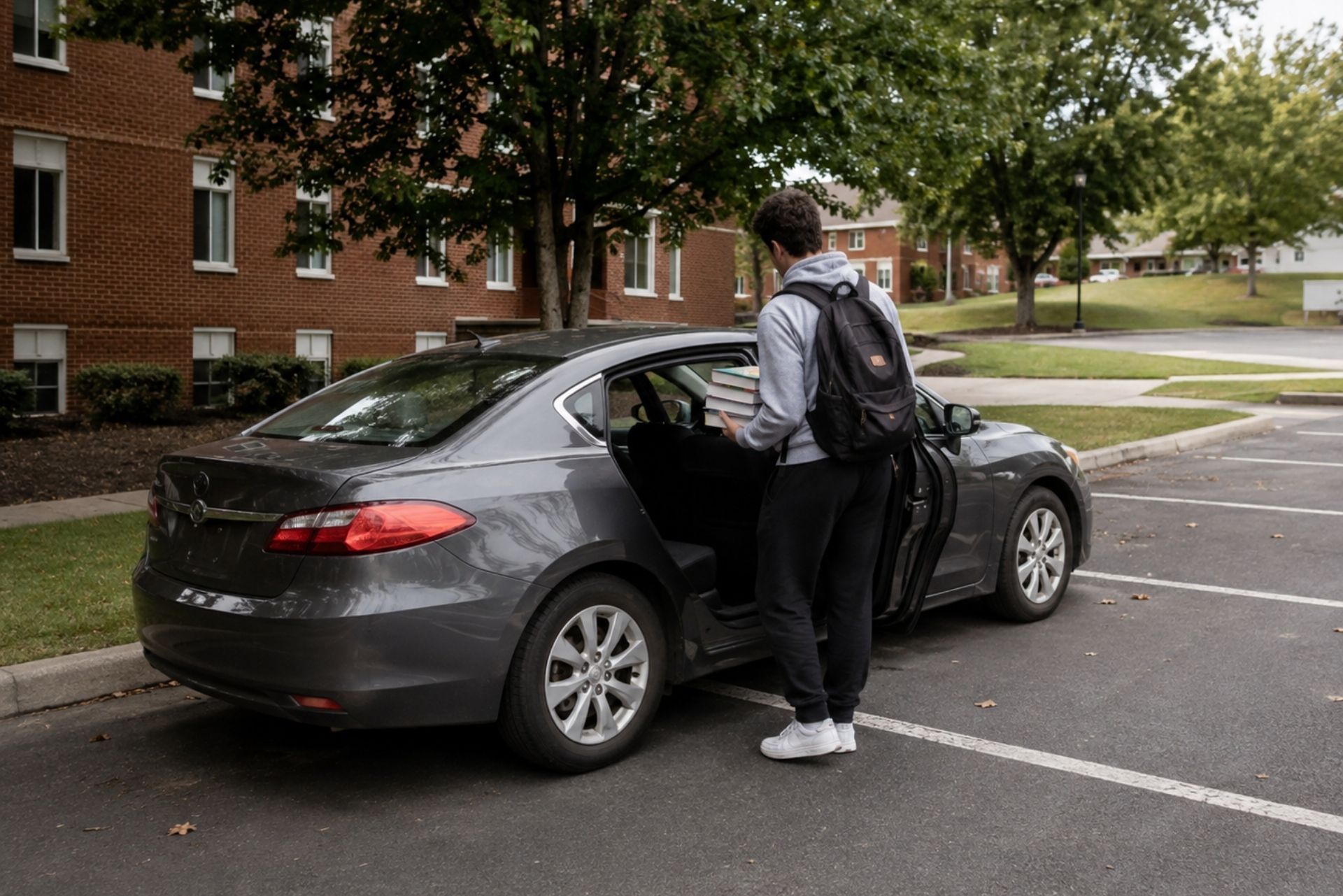
A substantial number of Virginia's college students come from other states. If you are attending a Virginia university but your permanent home is in Maryland, North Carolina, Pennsylvania, or elsewhere, your insurance situation involves a few extra considerations. Virginia law does not require out-of-state students to re-register their vehicle in Virginia as long as they maintain valid registration and insurance in their home state. Your home-state policy will generally provide coverage while you drive in Virginia.
That said, your home-state minimum limits may differ from Virginia's 50/100/25 requirements. If your home state has lower minimums, your policy will still respond to claims, but you could face a coverage gap if Virginia's requirements exceed your policy limits. It is wise to review your declarations page and consider raising your limits to at least match Virginia's standards.
Where to Register Your Vehicle
If you plan to stay in Virginia after graduation, accept a job in the state, or establish permanent residency, you are required to register your vehicle with the Virginia DMV and obtain a Virginia-compliant insurance policy within 30 days. Students who remain only temporarily - for example, those who return home each summer - generally do not need to re-register.
One common mistake involves students who let their home-state registration lapse while attending school in Virginia. This can create a gap in coverage and registration that triggers penalties in both states. Keep your home-state registration current and ensure your insurer knows your vehicle is garaged at your campus address, as the garaging location affects your premium calculation and claims processing.
Common Questions About Student Coverage in Virginia
Do I need my own policy if I am on my parents' insurance? Not necessarily. As long as you are listed as a driver on your parents' policy and meet the carrier's residency requirements, you are covered. Confirm with your insurer that your campus location is noted on the policy.
Does my credit score affect my car insurance rate in Virginia? Yes. Virginia permits insurers to use credit-based insurance scores as a rating factor. Students with limited credit history may see higher premiums, which is another reason staying on a parent's policy can be advantageous.
Will a parking ticket affect my insurance premium? Parking tickets are not moving violations and do not appear on your driving record, so they will not directly affect your premium. Moving violations like speeding or running a red light, however, can remain on your record for a five-to-seven-year look-back period used by underwriters.
Can I suspend my coverage if I do not drive during the school year? You should not cancel your policy entirely, as a lapse in coverage can increase future premiums and may violate Virginia law if the vehicle remains registered. Some carriers offer storage or suspension options that reduce your premium while keeping the policy technically active.
Is rideshare coverage needed if I drive for Uber or Lyft near campus? Yes. Personal auto policies exclude
commercial rideshare activity. You will need a rideshare endorsement or a separate commercial policy to be covered while carrying passengers for hire.
Making the Right Choice for Your Education
Finding the right auto insurance as a college student in Virginia requires balancing legal compliance, financial protection, and affordability. The 50/100/25 liability minimums set a floor, but your actual coverage needs depend on your vehicle's value, your driving habits, and your financial situation. Taking advantage of good student discounts, staying on a parent's policy when possible, and exploring telematics programs can meaningfully reduce your costs without sacrificing protection.
ABP Insurance Agency, Inc. works with over 25 carriers and offers support in nine languages, including Spanish, Vietnamese, Korean, and Mandarin, making it straightforward for diverse Virginia families to compare student auto insurance options side by side. With 120+ five-star Google reviews, the agency has a strong track record of helping young drivers and their families find coverage that fits. If you are preparing for the upcoming semester and want to ensure your policy is properly structured, get in touch with one of their agents for a free quote and personalized guidance.
Our Reviews
Trusted Advice, Proven Results
See what our clients have to say about their experience working with us, or share feedback about your experience.

PERSONAL INSURANCE
Protect What Matters Most
Home, auto, and life coverage at competitive rates from 25+ carriers.
Home Insurance
Covers your home and belongings from events like fire, theft, or storms. Ensures peace of mind with clear, reliable coverage for houses, condos, apartments, and rentals
Auto Insurance
Covers vehicle repairs, liability, and medical costs from accidents. Protects you and your car with easy-to-understand policies that meet Virginia requirements.
Umbrella Insurance
Provides extra liability coverage beyond home and auto policies. Adds protection for unexpected situations that exceed your standard policy limits.
Renters Insurance
Covers your personal belongings and provides liability protection if you rent your home. Replaces items damaged by fire, theft, or water at a low monthly cost.
Condo Insurance
Fills the coverage gaps your HOA master policy leaves open. Protects your unit's interior, personal property, and liability from covered losses.
Classic & Specialty Vehicles
Coverage for classic cars, motorcycles, ATVs, boats, and RVs. We partner with specialty carriers like Hagerty to protect vehicles that standard auto policies do not cover.
BUSINESS INSURANCE
Secure What You've Built
Coverage solutions for growing companies backed by decades of commercial experience.






INDUSTRIES WE SERVE
Virginia's Businesses We Protect
Insurance solutions to help Virginia businesses protect their assets, employees, and operations.



FAQs
Your Questions, Answered
Explore our FAQs to get answers to some of the most common questions about our insurance solutions and services.
What languages do your agents speak?
We have agents who are fluent in Spanish, Vietnamese, Mandarin, Cantonese, Korean, Hindi, Urdu, and Punjabi. If you prefer a language other than English, just let us know!
Who do you typically work with?
We work with clients at all stages of life—from young professionals and growing families to high-net-worth individuals and retirees. We work with both small and large companies. No matter where you are on your journey, we can provide insurance solutions that align with your needs.
How do I get started?
It’s easy! Simply click here to get started. From there you will be able to seamlessly transfer your current coverage information to us or answer a few questions and one of our agents will be in touch.
How do you charge for your services?
We never charge fees for our service. As independent agents, we are paid by the insurance company after the policies you select are issued. Our compensation is a small percentage of the policy premium.
What makes ABP Insurance different from other insurance providers?
ABP Insurance is an independent agency. We work with over 25 insurance carriers to find the best coverage and rates for your needs. We do not represent a single company — we represent you. Our team also speaks nine languages, making us one of the most accessible agencies in Northern Virginia. We combine modern technology with personal service so clients get fast quotes, clear explanations, and ongoing support throughout their policy term.
What areas does ABP Insurance serve?
Our office is in Falls Church, Virginia, and we serve clients throughout Northern Virginia, the greater D.C. metro area, and beyond. We currently write policies in Virginia, Maryland, Washington D.C., Massachusetts, New Hampshire, Maine, Georgia, Texas, and North Carolina. Because we work with many of the largest national carriers, we can often help clients who own property in multiple states or who are relocating.
Contact Us
Phone Number:
703-846-0558
Email Address:
info@abpinsurance.com
Located at: 8315 US-29 Ste 215, Fairfax, VA 22031, United States
In-Person by Appointment Only